

Image 1

Image 2

Image 3
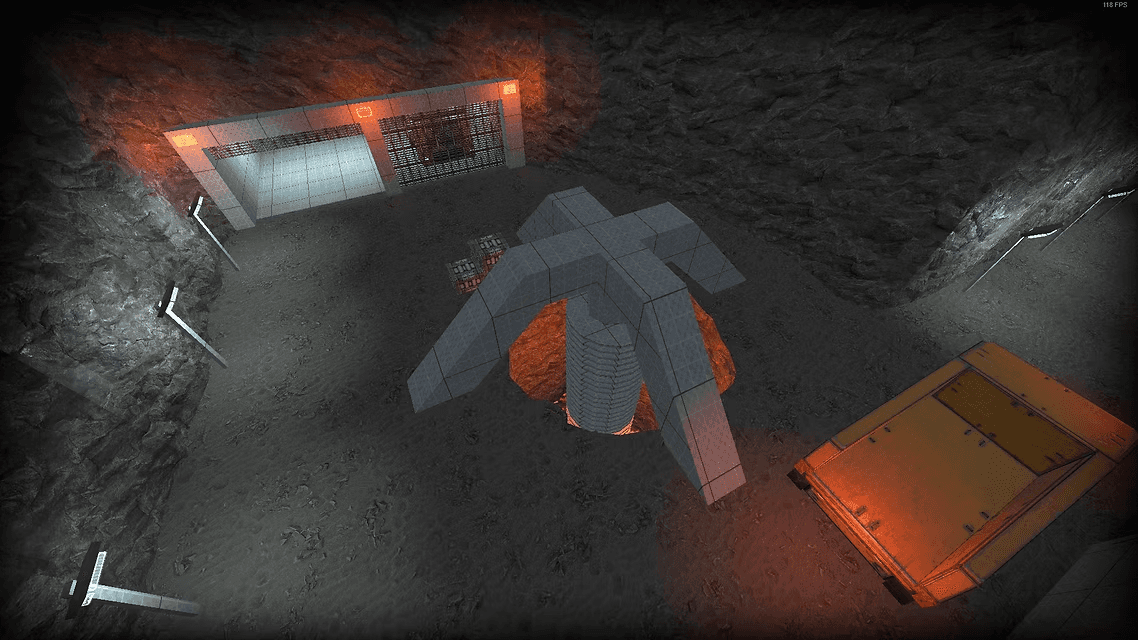
Image 4

Cosmic Assault
FPS Prodeus Level Design
Pre-Production
Level Flow
Combat & Pacing
Lighting & Scripting
Reflection & Feedback
Cosmic Assault is a level I made for the first-person retro boomer
shooter game called Prodeus. I made this during my final major
module for my Master's degree.
In this level, you attack a mining facility built into an asteroid that
has been taken over by aliens. Your objective is to assault the
base and take out the leader to regain control. Find secrets and
powerful weapons by exploring the level, increasing your lethality.
During this projects development I aimed to develop my skills in
Pacing, Level Flow and Combat encounters.
My goal with this project was to create a playable level inside an existing game to
practice and demonstrate skills in first-person shooter level design. This page will show
sections of my design process. To see the full documentation of this projects
development, head over to my blog.
As of February 2025, this level has had 540 downloads with a 4 out of 5 star rating!
Solo Project
Created In Prodeus Level Editor
Developed in 8 Weeks
Level Design
Level Scripting
Lighting

During the pre-production phase of this level's development, I decided on a theme and a general layout of how the level would play. The initial layout shows the first iteration of the mining facility. The outside mining area isn't seen on here as that was a later addition to the level. I designed the layout with a mix of open and tighter areas to create variety in gameplay.
I also spent time playing and studying Prodeus' campaign levels to take notes on common themes of layout and why they have been made that way. I found that there is never just one way to approach an area of the level or combat encounter. And there are always secrets to uncover and areas to explore that will reward the player. I took these points and applied them to my design to better align it with the game's core mechanics and gameplay pace.
I also knew that I wanted my levels theme to really shine and stand out. So I wanted to make it make sense. I didn't initially intend to use materials and models, however after looking into the games asset library I found things that could make my level look believable and readable as an asteroid mining facility. I planned to only use materials on things such as the skybox, rock walls and dirt floors to help push the visual narrative of my level, whilst keeping everything else as blockout to remain within the project scope.
The level's flow was an important factor in the design process of this map. I wanted the player to always have an idea of where they need to go. I achieved this mainly through composition and lighting. The first image shows the first area of the level, with a path going straight down the middle, suggesting to the player that this is the main route to the next area. It also shows 2 doors either side. Experienced players will recognise that the red door requires a red key, so the only logical way to get there would be the white door on the left. I designed this area this way to subtlety give the player the information they need in order to traverse the level, I also added things such as the windows in the sky bridge to show that it is a playable area.
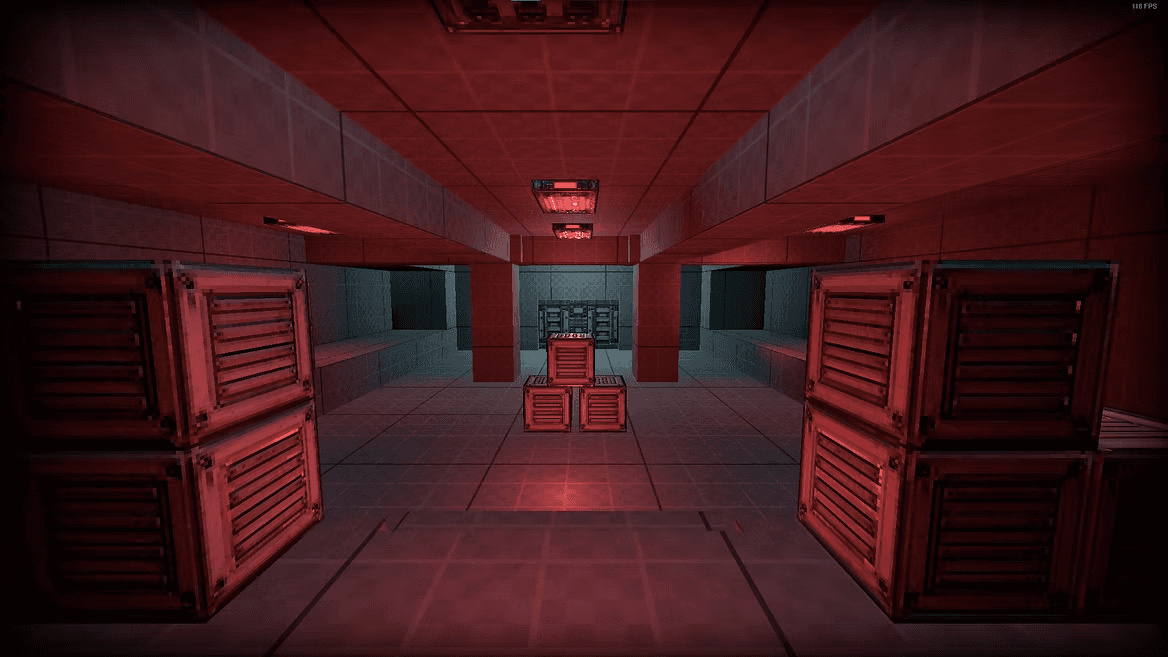
In the vehicle holding bay (image 3) the player has 4 paths to choose from to progress through the level, each with different combat encounters. All 4 paths lead to the same area, however, I wanted the level to feel less linear so I applied the illusion of choice to make the players actions feel more impactful. This also allowed me to add secrets and rewards for taking certain paths, whilst giving more opportunity for exploration and replayabillity.
I designed the level to progressively descend in height. This not only applies to the theme of the level, being a mining facility with a boss lurking underneath, but it also tells the player that they are making progress. It also makes the level more interesting and allows for areas with verticality as a factor in combat, which again, creates more interesting encounters and gives the player different choices on how to approach them.
The level lighting was the final task of the project after I finished scripting the enemies. It was important to add some basic lighting to bring the level to life and help direct the player to certain areas of the level.
The level scripting allowed me to control what happens in the level. I carefully scripted combat encounters to spawn enemies on certain triggers to ensure the combat felt fluent. An example of this would be in the final boss room, shown in the video on the right hand side, where I use waves of enemies that spawn after the final enemy of the previous wave is killed, this prevented the room from being crammed as it is quite small. It also allowed me to control the difficulty of the encounter better, as well as giving time for the player to heal and reload between waves.
In reflection, I think this project was an overall success. I learnt a lot about designing levels, and just how important it is to stick to the fundamental principals of FPS level design, whilst being creative with my designs. I also learned that level design is a constant cycle of iteration and testing, and that this cycle is important for improvements in my work. However, there are things that went wrong. There were ways that I was unaware of to maximise performance that I didn't use, such as the flipping faces tool, this would of allowed me to create a room from a single cube rather than 6 cubes with 36 faces, saving a lot of resources.
I received multiple points of feedback on this level. People were happy with the level layout however some of the combat encounters felt as if they could be better designed. One suggestion was to have enemies attack at different angles rather than straight on at the player to apply more pressure on the player. Some said the combat felt flat, as though a wall of enemies would spawn in front of you and then rinse and repat. I took this feedback and applied it to certain areas of the level to make for more surprising combat. One example of this is how I allowed enemies to use elevation to have an advantage over the player, making them think twice about how to approach it. This also encouraged players to use a wider variety of weapons for different situations.
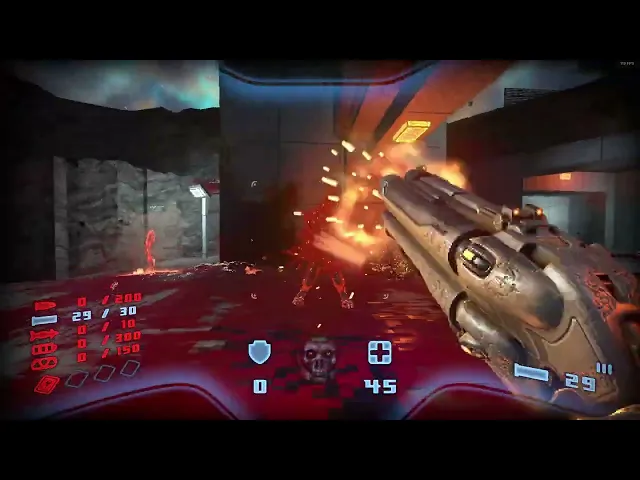
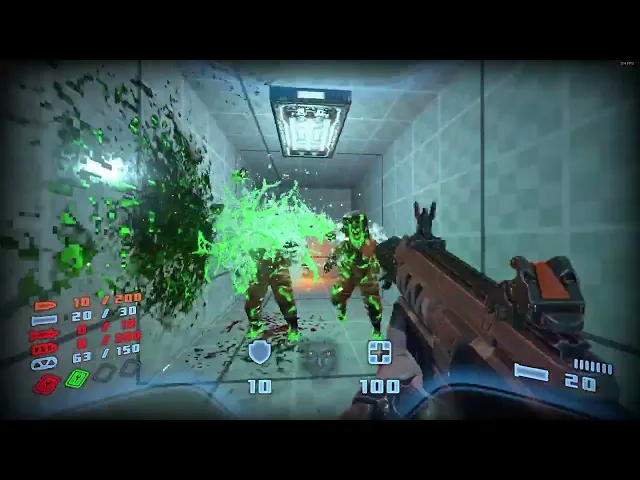
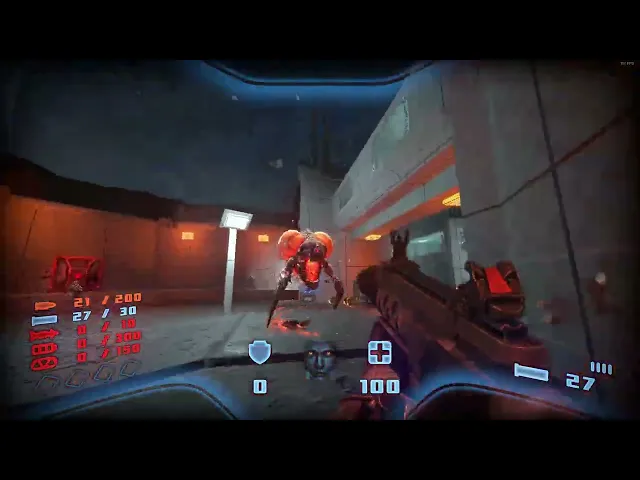
My goal with this level was to have a constant flow of enemies to ensure persistent combat. However, I decided to create gaps in combat to encourage exploration for the player. My thought process behind this was that when the player isn't fighting, they are more likely to take in their surroundings and start to explore the level, as shown in the GIF on the left hand side. But if they choose not to explore and carry on, they will trigger the next wave of enemies. If the player chooses to explore, they will find more powerful weapons, health regenerations and hidden combat encounters. Having a constant flow of enemies set a fast pace for the level, which is what I intended as Prodeus is a fast-paced FPS game. It also meant that I had to ensure the player always had enough ammunition to continue fighting at all times. I ensured this by placing ammunition crates in each area of the map for a variety of weapons, and I also relied on certain enemy types that drop ammunition when killed. The same applied for health.
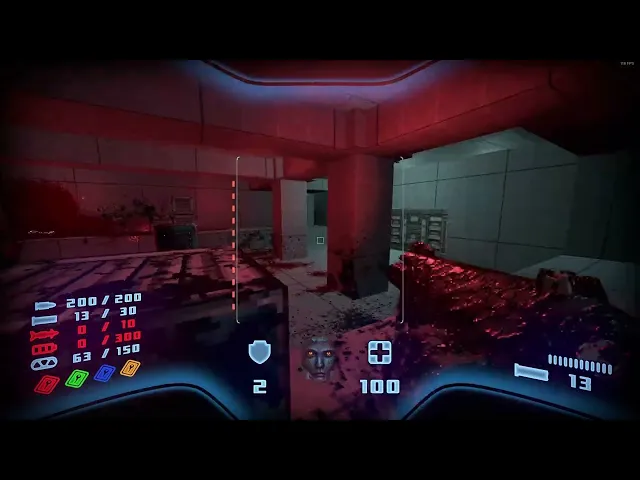
As the player descends through the level, I wanted the difficulty to increase. I achieved this through a few different methods. I increased the amount of enemies, I added in new enemy types that are more powerful, and I forced the player to explore whilst fighting enemies, where as in the start of the level, I left gaps in combat for the player to explore. One example of this is shown in the GIF on the right hand side, which shows the player searching for the yellow key they need in order to progress, whilst fighting difficult enemies that can respawn, keeping the difficulty and pace high. I also ensured that these areas had plenty of cover for the player to use in order to avoid being hit or reload to get back into the fight.

Combat & Pacing
Combat & Pacing
Image 1
Image 2
Image 3
Image 4
Cosmic Assault
FPS Prodeus Level Design
Pre-Production
Level Flow
Combat & Pacing
Lighting & Scripting
Reflection & Feedback
Cosmic Assault is a level I made for the first-person retro boomer
shooter game called Prodeus. I made this during my final major
module for my Master's degree.
In this level, you attack a mining facility built into an asteroid that
has been taken over by aliens. Your objective is to assault the
base and take out the leader to regain control. Find secrets and
powerful weapons by exploring the level, increasing your lethality.
During this projects development I aimed to develop my skills in
Pacing, Level Flow and Combat encounters.
My goal with this project was to create a playable level inside an existing game to
practice and demonstrate skills in first-person shooter level design. This page will show
sections of my design process. To see the full documentation of this projects
development, head over to my blog.
As of February 2025, this level has had 540 downloads with a 4 out of 5 star rating!
Solo Project
Created In Prodeus Level Editor
Developed in 8 Weeks
Level Design
Level Scripting
Lighting
During the pre-production phase of this level's development, I decided on a theme and a general layout of how the level would play. The initial layout shows the first iteration of the mining facility. The outside mining area isn't seen on here as that was a later addition to the level. I designed the layout with a mix of open and tighter areas to create variety in gameplay.
I also spent time playing and studying Prodeus' campaign levels to take notes on common themes of layout and why they have been made that way. I found that there is never just one way to approach an area of the level or combat encounter. And there are always secrets to uncover and areas to explore that will reward the player. I took these points and applied them to my design to better align it with the game's core mechanics and gameplay pace.
I also knew that I wanted my levels theme to really shine and stand out. So I wanted to make it make sense. I didn't initially intend to use materials and models, however after looking into the games asset library I found things that could make my level look believable and readable as an asteroid mining facility. I planned to only use materials on things such as the skybox, rock walls and dirt floors to help push the visual narrative of my level, whilst keeping everything else as blockout to remain within the project scope.
The level's flow was an important factor in the design process of this map. I wanted the player to always have an idea of where they need to go. I achieved this mainly through composition and lighting. The first image shows the first area of the level, with a path going straight down the middle, suggesting to the player that this is the main route to the next area. It also shows 2 doors either side. Experienced players will recognise that the red door requires a red key, so the only logical way to get there would be the white door on the left. I designed this area this way to subtlety give the player the information they need in order to traverse the level, I also added things such as the windows in the sky bridge to show that it is a playable area.
In the vehicle holding bay (image 3) the player has 4 paths to choose from to progress through the level, each with different combat encounters. All 4 paths lead to the same area, however, I wanted the level to feel less linear so I applied the illusion of choice to make the players actions feel more impactful. This also allowed me to add secrets and rewards for taking certain paths, whilst giving more opportunity for exploration and replayabillity.
I designed the level to progressively descend in height. This not only applies to the theme of the level, being a mining facility with a boss lurking underneath, but it also tells the player that they are making progress. It also makes the level more interesting and allows for areas with verticality as a factor in combat, which again, creates more interesting encounters and gives the player different choices on how to approach them.
The level lighting was the final task of the project after I finished scripting the enemies. It was important to add some basic lighting to bring the level to life and help direct the player to certain areas of the level.
The level scripting allowed me to control what happens in the level. I carefully scripted combat encounters to spawn enemies on certain triggers to ensure the combat felt fluent. An example of this would be in the final boss room, shown in the video on the right hand side, where I use waves of enemies that spawn after the final enemy of the previous wave is killed, this prevented the room from being crammed as it is quite small. It also allowed me to control the difficulty of the encounter better, as well as giving time for the player to heal and reload between waves.
In reflection, I think this project was an overall success. I learnt a lot about designing levels, and just how important it is to stick to the fundamental principals of FPS level design, whilst being creative with my designs. I also learned that level design is a constant cycle of iteration and testing, and that this cycle is important for improvements in my work. However, there are things that went wrong. There were ways that I was unaware of to maximise performance that I didn't use, such as the flipping faces tool, this would of allowed me to create a room from a single cube rather than 6 cubes with 36 faces, saving a lot of resources.
I received multiple points of feedback on this level. People were happy with the level layout however some of the combat encounters felt as if they could be better designed. One suggestion was to have enemies attack at different angles rather than straight on at the player to apply more pressure on the player. Some said the combat felt flat, as though a wall of enemies would spawn in front of you and then rinse and repat. I took this feedback and applied it to certain areas of the level to make for more surprising combat. One example of this is how I allowed enemies to use elevation to have an advantage over the player, making them think twice about how to approach it. This also encouraged players to use a wider variety of weapons for different situations.
My goal with this level was to have a constant flow of enemies to ensure persistent combat. However, I decided to create gaps in combat to encourage exploration for the player. My thought process behind this was that when the player isn't fighting, they are more likely to take in their surroundings and start to explore the level, as shown in the GIF on the left hand side. But if they choose not to explore and carry on, they will trigger the next wave of enemies. If the player chooses to explore, they will find more powerful weapons, health regenerations and hidden combat encounters. Having a constant flow of enemies set a fast pace for the level, which is what I intended as Prodeus is a fast-paced FPS game. It also meant that I had to ensure the player always had enough ammunition to continue fighting at all times. I ensured this by placing ammunition crates in each area of the map for a variety of weapons, and I also relied on certain enemy types that drop ammunition when killed. The same applied for health.
As the player descends through the level, I wanted the difficulty to increase. I achieved this through a few different methods. I increased the amount of enemies, I added in new enemy types that are more powerful, and I forced the player to explore whilst fighting enemies, where as in the start of the level, I left gaps in combat for the player to explore. One example of this is shown in the GIF on the right hand side, which shows the player searching for the yellow key they need in order to progress, whilst fighting difficult enemies that can respawn, keeping the difficulty and pace high. I also ensured that these areas had plenty of cover for the player to use in order to avoid being hit or reload to get back into the fight.
Combat & Pacing
Combat & Pacing